Not following the crowd
Rhino is the industry standard. Everyone tells me to teach it. I chose the harder, stranger tool instead, and I want to write down why before I forget the reasons.

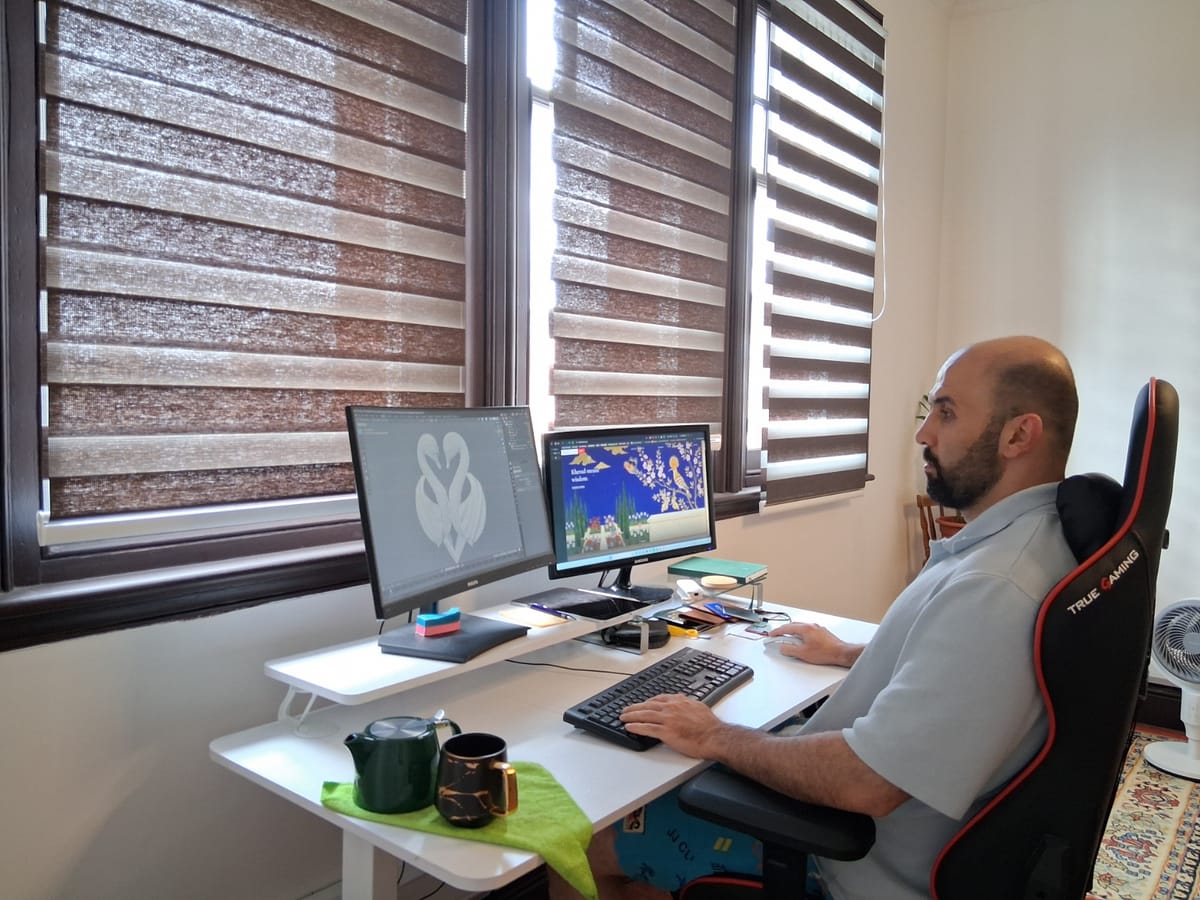
I sat down one morning this week and wrote, at the top of the page, "Still I am in the battle of Rhino vs Blender." I have been having that argument with myself for longer than I would like to admit.
Rhino is the industry standard for jewellery design. It is what nearly everyone teaches, what nearly every course sells, what nearly every student expects to be handed on day one. About ninety percent of the designs I see in this trade could be built in it. It works. It is safe. It is also, I wrote that morning, "not the way of modelling I use for myself."
I prefer sculpting, in Blender, the way a hand prefers one tool over another for reasons it cannot always explain. Blender is free. It is open source. I can pull it apart and rebuild the parts I do not like. Nobody teaches jewellery this way, which is exactly the part that unsettles me and the part that draws me in at the same time.
I wrote myself a small, honest confession that morning: "even if it is tempting to follow the crowd and make Rhino tutorials, I will focus on Blender and make it work." Tempting is the right word. The crowd is not wrong to be a crowd. There is a real cost to being the person teaching the tool nobody else is teaching. Fewer people already know it. Fewer people are searching for it. It would, by every reasonable measure, be easier to teach the thing everyone already wants taught.
I decided anyway. Seven forty-two in the morning, the twenty-eighth of August, I wrote it down like a person signing something: I decided, from today, focusing on Blender.
By that evening I had a plan, small and specific rather than grand: review the tutorials, start modelling my own designs, start making them, start publishing the process as I go, in public, mistakes included. "I will be master of Blender for jewellery," I wrote, which reads back now as more of a promise to myself than a prediction.
I do not think this is really about software. Two programs can both make a ring. What it is actually about is whether I am willing to build my own way of doing something, slowly and in full view, instead of taking the path that is already paved because it is already paved. That is a harder thing to choose than a menu item in a preferences panel. It costs time I do not get back if it turns out to be the wrong call.
I want to be honest about the other half of that day, too, because it would be dishonest to leave it out. Later that evening I wrote myself a second, much smaller note: that I should not forget to rest, that I need enough sleep, enough rest, alongside all of this. I notice I have to remind myself of that in writing, as if I would otherwise not believe it was allowed. Choosing the harder path is not the same thing as choosing to run yourself into the ground for it, and some mornings I need the reminder that those are two different decisions.
I do not know yet whether Blender was the right call, in the sense that markets and outcomes will eventually tell me. What I do know is that I made the decision for a reason I can still say out loud months from now, which is more than I can say for most of the choices that get made simply because everyone else already made them first.